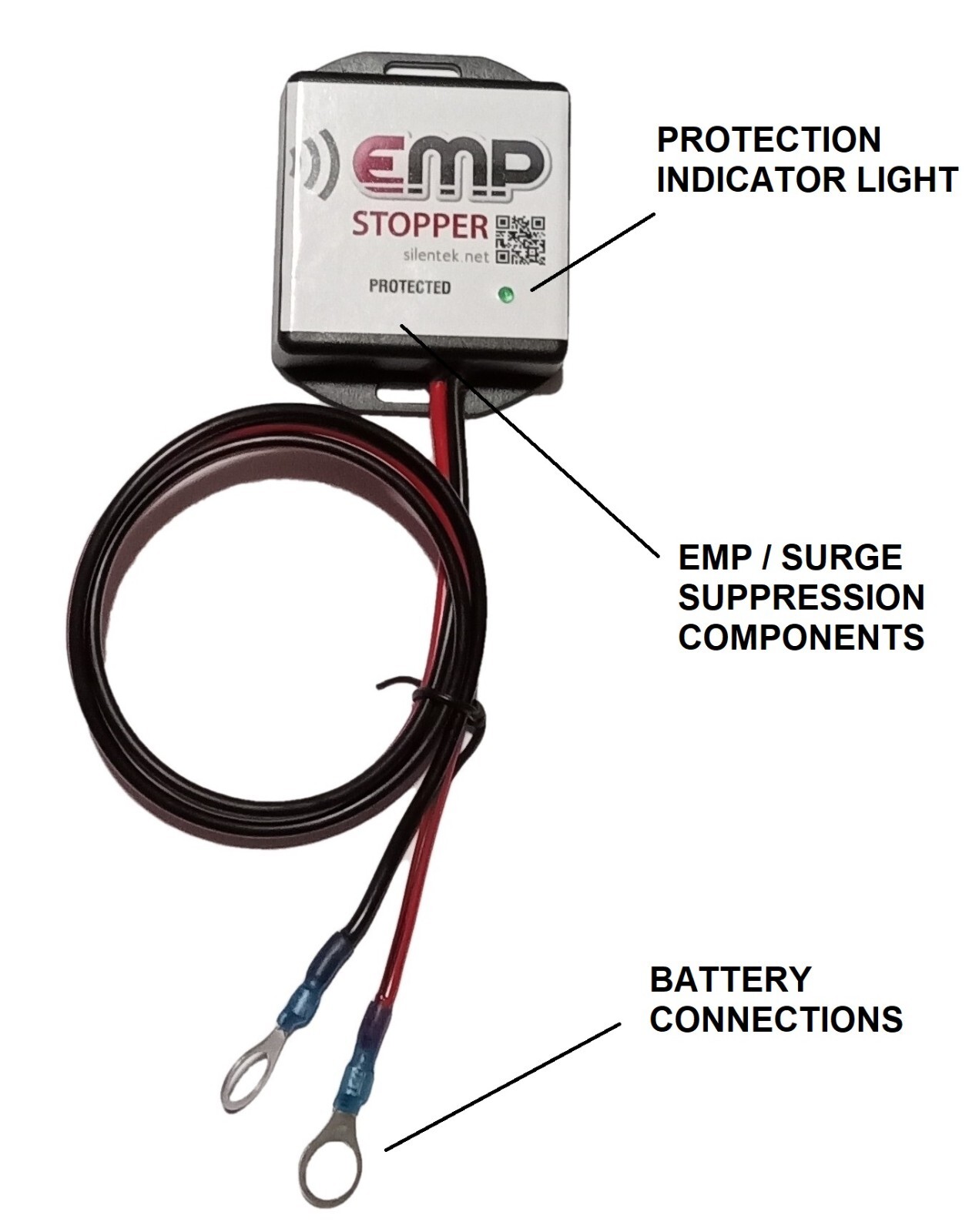
LIFEPO4 Batteries require a BMS (Battery Management System) to monitor the lithium ion cells. Unfortunately, the sensitive electronics inside the BMS are vulnerable to EMP attacks and other electrical surges, leaving you with an expensive paperweight if not protected.The EMP Stopper is the solution - a transient protection device. It protects your batteries against lightning, surges as well as EMP charges. Easily installs across the battery terminals. The device is packed with transient voltage suppression components which have ultra high reliability (AEC Q101 qualified), have a turn-on time of less than 1 picosecond, and can suppress up to 250,000 Amps. This is more surge capacity than most 'whole house' power panel surge protectors. Solid protection for any 12V battery.EMP Stopper Features:Weight: Approx. 4 oz.
Size: Approx. 3" x 2.5" x 1"
Current Draw: Approx. 2mA
Protection Capacity: 250kA
Voltage: 12V
LED Indicator light
Protection against Lightning, Surges, EMPs
Made in USA, Ships fast from USA
Tested Before ShipmentHow can the EMP Stopper be effective against an EMP when it’s so small?The danger from an EMP is mainly the high voltages that are introduced on the wiring from E1 and E2. Those transient voltages are extremely brief in time (from nanoseconds to microseconds) and can therefore be suppressed using small devices. This is distinctly different than the case with homes, which would also experience a powerful E1 current surge from the power grid.Is it ok to use multiple EMP Stopper devices on one battery?Yes, using multiple EMP Stoppers can do a better job shunting away the unwanted energy. They are stackable.Can the light on the EMP Stopper drain my battery?No, the light uses extremely low levels of power, approx 5mA, which is much less than car radios and other accessories. This amount of current draw is negligible.
Will the EMP Stopper interfere with any other systems?No, the EMP Stopper monitors the wiring for voltage surges and only activates once one is detected. It then shorts this energy in a fraction of a second, protecting the battery electronics. Once the surge has been neutralized, the module returns to normal, ready for the next surge.